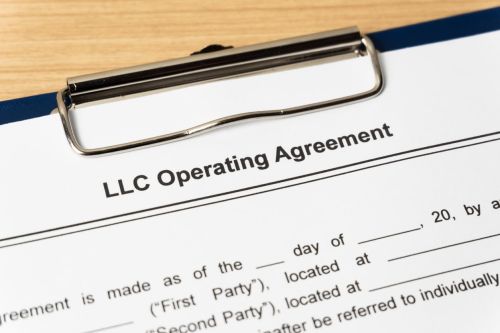
The paperwork often gets treated as a formality. Two or three people get together with a great business idea and decide to form an LLC. They may use an online formation service, but they never get around to writing a thorough operating agreement. Some don't want to worry about the details; others assume everyone is on the same page. Oklahoma law doesn't require a complete written agreement—it supplies default rules that fill in the blanks—but those defaults may not produce an outcome the members would have chosen. An incomplete operating agreement can create significant legal risk for the members.
Key Takeaways
- The Oklahoma Limited Liability Company Act defines statutory defaults for operating agreement terms.
- Operating agreements can be implied, oral, or a mix of both in Oklahoma.
- Voting power and management structure are commonly incorrectly assumed functions of LLC operation.
- A simple majority of the membership interest entitled to vote is the default process for amendments.
- A member leaving, dying, or selling their interest is the most common source of operating agreement gaps.
- An Oklahoma LLC Can Run on an Oral or Implied Agreement, Which Is the First Gap
Members have broad discretion when creating an LLC operating agreement. Under 18 O.S. § 2001(20), a legally enforceable operating agreement can be oral, implied, in a record, or any combination of these. That means regardless of what the members put in writing, what they say and how they act can shape how the operating agreement is interpreted in court.
An operating agreement establishes the terms the members follow when running their LLC. Under 18 O.S. § 2012.2, the operating agreement governs the relations among members, the rights and duties of any manager, the company's activities, and how the agreement itself may be amended. It's common for members to leave important terms out. When an operating agreement doesn't address an issue, the Oklahoma Limited Liability Company Act fills the gap with default statutory terms.
While Oklahoma recognizes oral and implied agreements, relying on them creates legal risk. A verbal agreement leaves room for misunderstandings and conflicting assumptions. An agreement that covers only formation of the business won't address most of the situations an operating agreement should cover. Those gaps invit disputes among members. Without a written agreement to point to, disagreements can escalate quickly and push the members into litigation. Resolving those disputes can consume significant time and money while disrupting operations.
Exit, Deadlock, and Capital Call Provisions Are the Gaps That Most Often Cause Disputes
When members come together, they tend to focus on the upsides of the venture. They aren't thinking about what happens when they disagree or when someone wants to leave. That tendency can leave gaps in the operating agreement. A good operating agreement addresses what happens when a member leaves, becomes disabled, or dies, and it should outline notice requirements, buyout options, and transfer restrictions. Beyond member exit, several areas are commonly overlooked when members create their operating agreement:
- Exit and buyout provisions: Members should address what happens when someone no longer wants to be a member, including valuation methods and buyout options.
- Deadlock-breaking mechanisms: If members hold 50/50 ownership, the agreement needs a way to break a deadlock. Otherwise, a single disagreement can bring the business to a halt until it is resolved.
- Capital call provisions: Disagreements over additional funding can create conflict when a member refuses or is unable to contribute more.
- Transfer restrictions: Members should address how new members are admitted, so the company can prevent unwanted additions.
Members shouldn't assume that Oklahoma's default rules give them the control they expect. Under 18 O.S. § 2033 and 18 O.S. § 2035, a transferee cannot become a full voting or managing member without the required member consent—by default, this means the written consent of members holding a majority of the profits not subject to the transfer. The statute does not, however, stop a member from transferring the financial side of their interest. If the operating agreement is silent, a member can assign their share of profits and distributions to someone else without the other members' consent. Members who want greater control need to include explicit transfer terms in the operating agreement.
When the operating agreement is silent on how members will resolve disputes and deadlocks, it leaves open how those conflicts get handled. Waiting until a dispute arises—or money is already at stake—is too late to decide the ground rules. One member may want mediation while another wants a simple majority vote. Members may even agree on voting but disagree on how much weight each member's vote carries.
Oklahoma's Default Voting and Amendment Rules May Not Match What Members Assumed
If the operating agreement is silent on how it may be amended, unanimous consent is not the default. Under 18 O.S. § 2012.2(E), the agreement may be amended with the approval of members holding a majority of the membership interest entitled to vote. In other words, members holding a majority of the voting interest can amend the agreement without unanimous consent. Certain amendments, however, still require unanimous consent by default under 18 O.S. § 2020(D)—including amendments that shorten the company's term, let a member withdraw, or reduce a required member vote.
Members may assume that each member gets one vote, or that voting power tracks ownership percentage. Neither is necessarily true. By default, members vote in proportion to their share of the company's profits. Those assumptions can create problems when the operating agreement doesn't clearly define how decisions are made, so the agreement should spell out voting rights, voting weights, and decision-making authority.
Another issue members should address is who will manage the LLC. Members often overlook stating whether the company is member-managed or manager-managed. In a member-managed LLC, the members run the company. In a manager-managed LLC, designated managers handle those responsibilities. The operating agreement should clearly state who manages daily operations to avoid disputes.
Consult with an Oklahoma Business Attorney About Your LLC Operating Agreement
The ideal time to prevent future conflict is at formation. A thorough operating agreement that addresses common situations—such as member exit, dispute resolution, and raising capital—gives the company a roadmap for when relationships break down. Taking a customized approach to multi-member businesses, the Oklahoma business attorneys at Titus Hillis help clients draft comprehensive LLC operating agreements. Contact the firm today or call 918-587-6800 to discuss your business formation goals.


 Share